In Fall of 2025, participants from the CUWP AI and Writing Institute completed inquiry cycles, implementing classroom plans that explored how AI can enrich writing instruction. The power of the cohort came from teachers teaching teachers, exploring real application with their students and asking questions rather than looking for quick answers. To share our findings, we have created a Quick Reference Guide (QRG) for Teaching Writing with AI.
2025 SI Inquiry Group Resources
Designing Authentic Writing Experiences
Amber Beckstrand, Jordan Cottam, and Brianna Gee (CUWP, 2025)
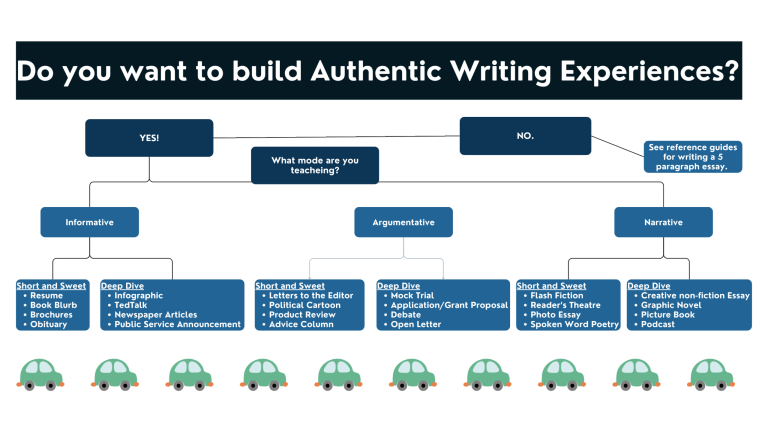
Students in all grades deserve opportunities to practice writing for the real world—with real audiences, real purpose and real goals. For most of us, essay writing stops once we leave formal education, but our writing needs outside of the classroom are as unique and individual as we are. Providing students with real-world writing opportunities will help them build the skills to adapt to new writing challenges and gain the skills to entertain, persuade, or inform in all kinds of ways for a variety of audiences. Check out this website created by CUWP Fellows to find strategies for authentic writing across narrative, expository, and argumentative modes.
Using AI in the Writing Process: A Guide for Teachers
Lindsey Reyes, Annika Nielsen, and Katy Bigham (CUWP, 2025)
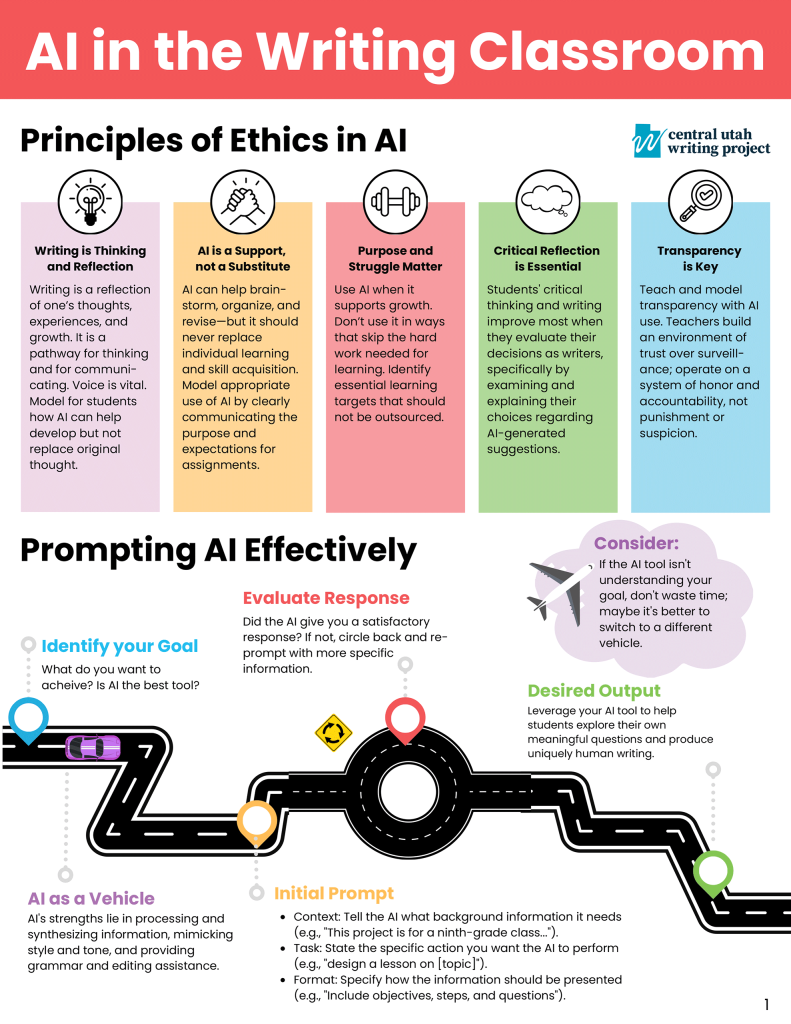
“Why use AI? Isn’t it bad for students’ writing?” It’s a fair question—and one many ELA teachers are asking. But when used thoughtfully, AI can actually support stronger writing, not weaken it. Instead of replacing the writing process, AI gives students low-stakes, immediate feedback that helps them take ownership of their revision. It can help them brainstorm, organize ideas, or rephrase awkward sentences—just like a helpful writing partner might. For teachers, it takes some of the pressure off by handling routine tasks, so we can spend more time having real conversations about content, voice, and meaning. AI doesn’t do the thinking for students—it creates more space for thinking to happen. Check out this website created by CUWP Fellows to find resources for engaging students with AI throughout all stages of the writing process.
Greenbelt Writing: Free, Exploratory, and Autonomous
Anna Dinsmoor, Mary Kathryn Hall, and Alyssa Murray (CUWP, 2025)
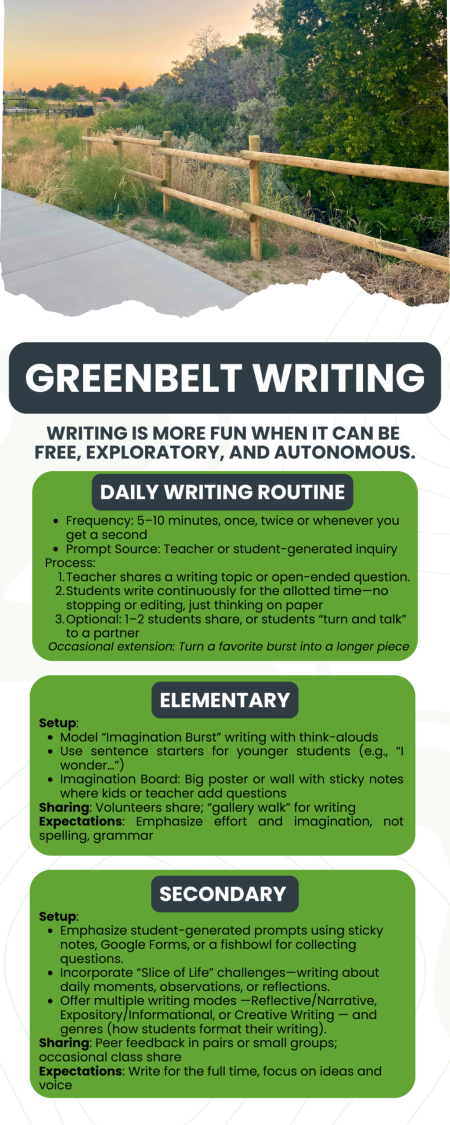
Every student deserves a space to discover and grow their unique writing identity. Yet with all our programs, timelines, and expectations, finding time for extra writing can feel impossible. Our inspiration comes from those quick 5-10 minute windows that appear throughout each day. By weaving in these short writing opportunities we give students a chance to think, reflect, and create alongside their classmates.
These brief but consistent moments will allow students to explore their ideas, develop confidence, and connect with others. Through daily writing, we hope to nurture a lifelong love of writing, empowering students to express themselves authentically and discover the power of their own stories. Check out this document and this infographic created by CUWP Fellows for a guide to using Greenbelt Writing in your classroom!
Reading and Writing Connections in the Classroom
Mindy Carlson, Trent Mikesell, Pat Mosbacker, and Stacy Selk (CUWP, 2025)
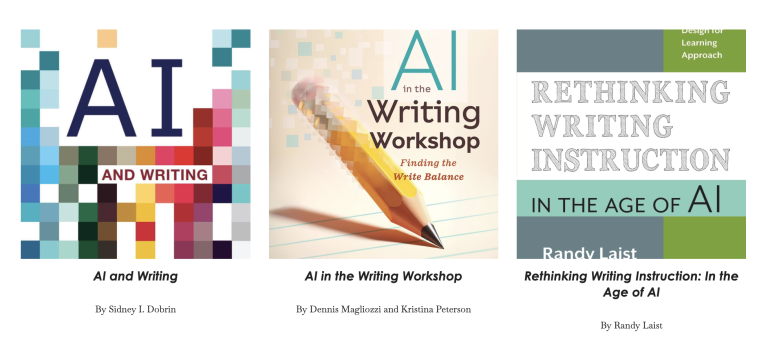
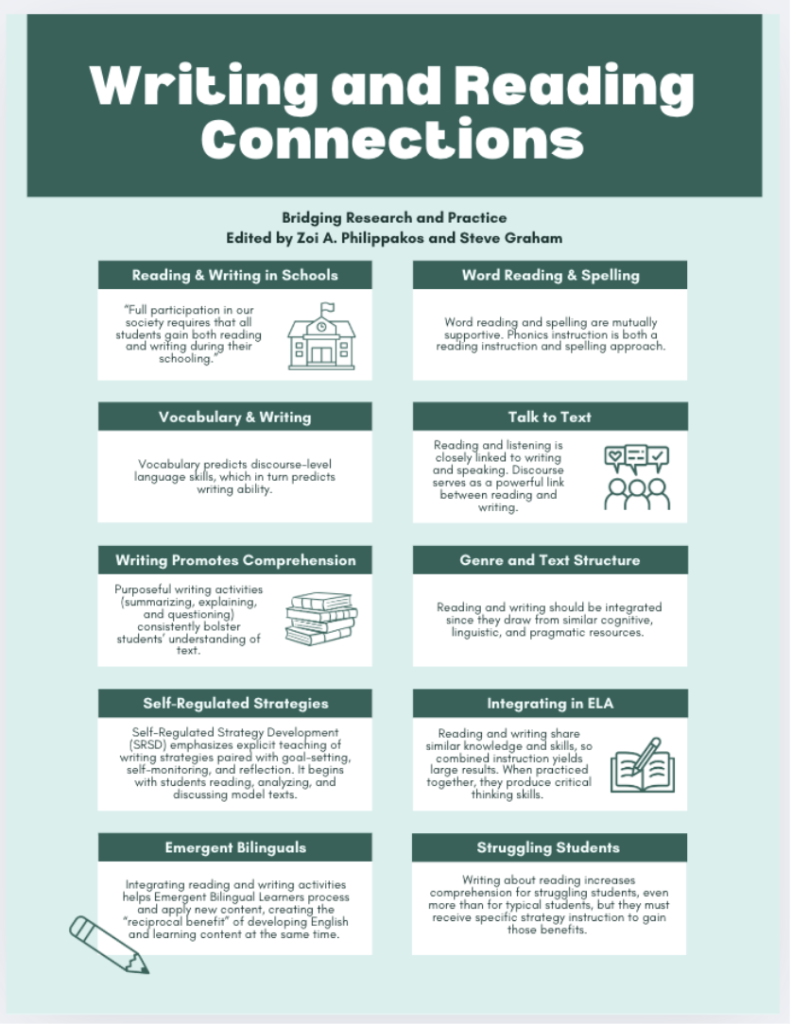
The Reading and Writing Connections Inquiry Group read this 2022 book of the same name. Applying the research in the book to their varied contexts (a district ELA specialist, a district K-6 literacy specialist, a junior high school teacher, and a third-grade teacher), they created infographics and compiled detailed notes from the book in hopes that other teachers would be able to incorporate these findings into their own teaching contexts.